
 Start Read
 Recommend
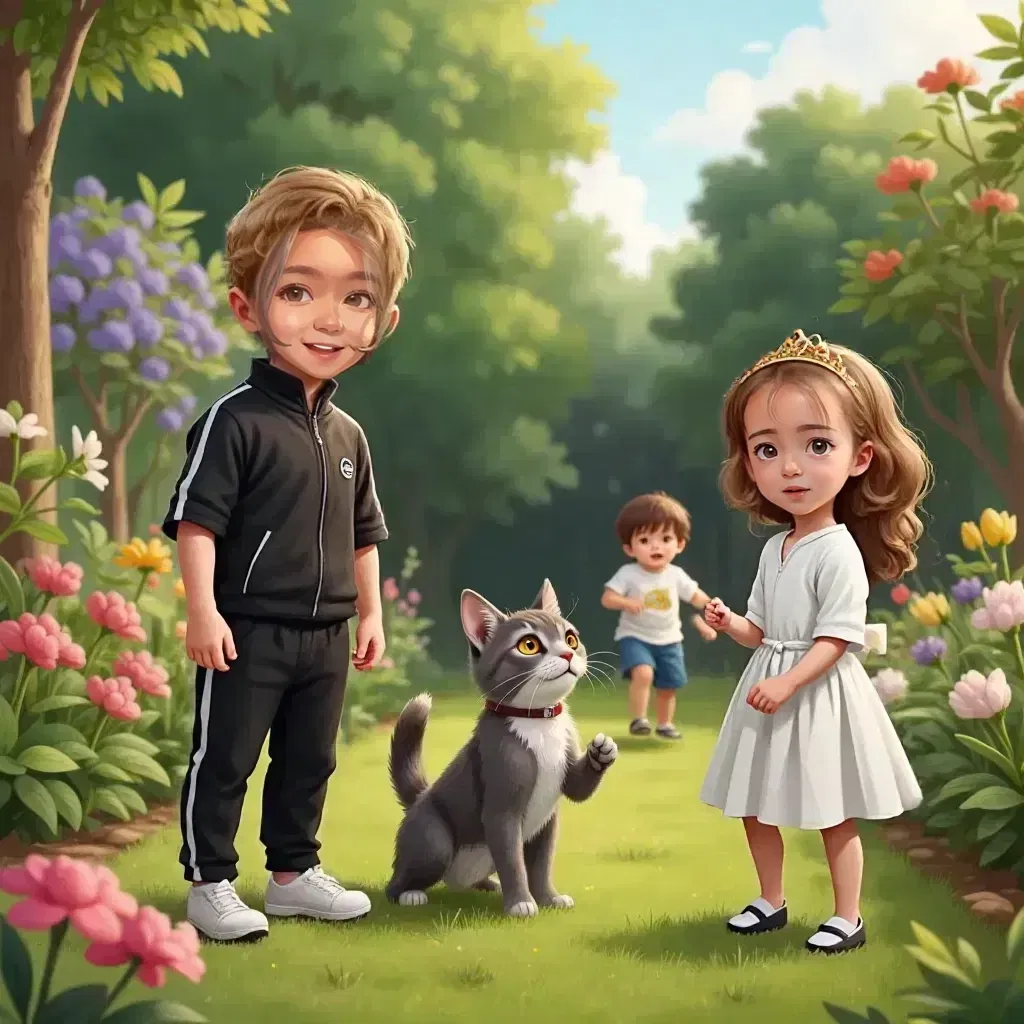
Four friends who go on magical adventures together. One takes two of them far from home for a while, but their friendship brings them back together
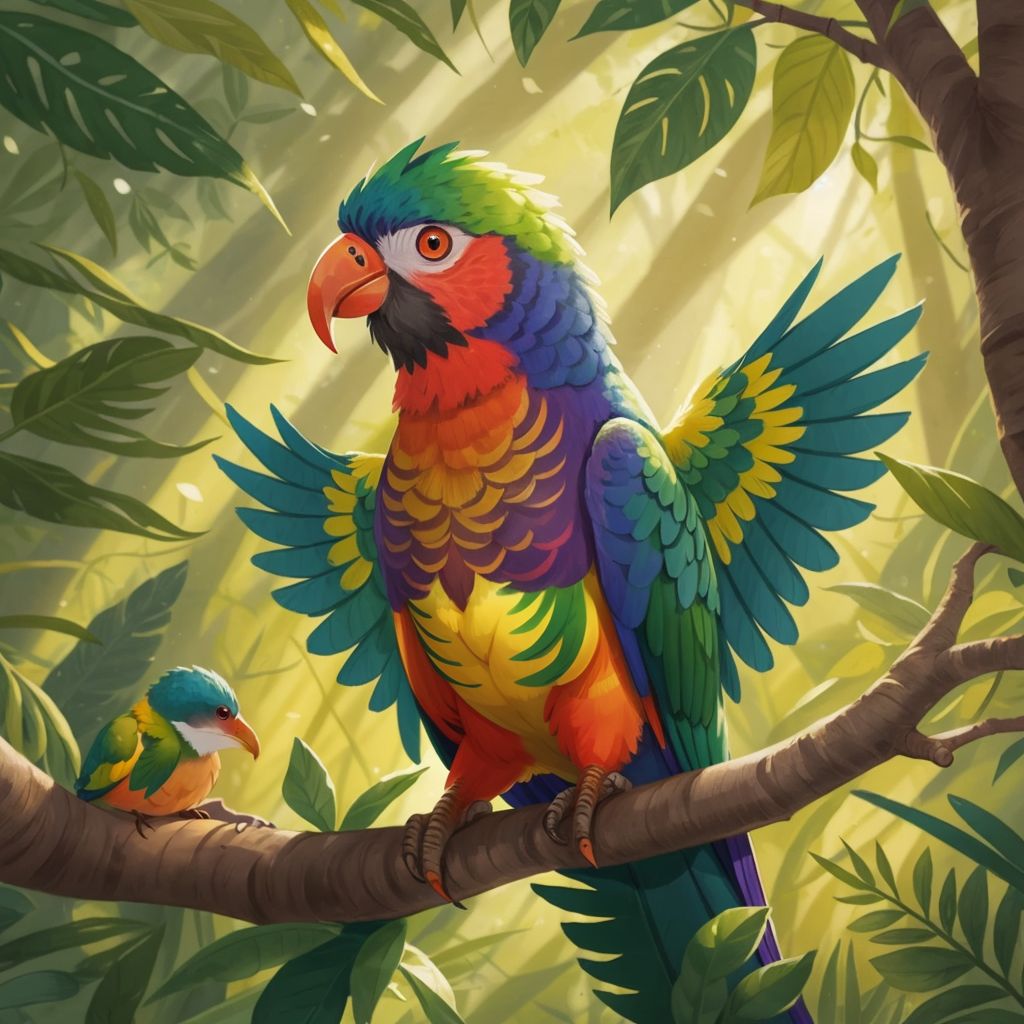
Lovely Bird grows and learns her environment around the forest.
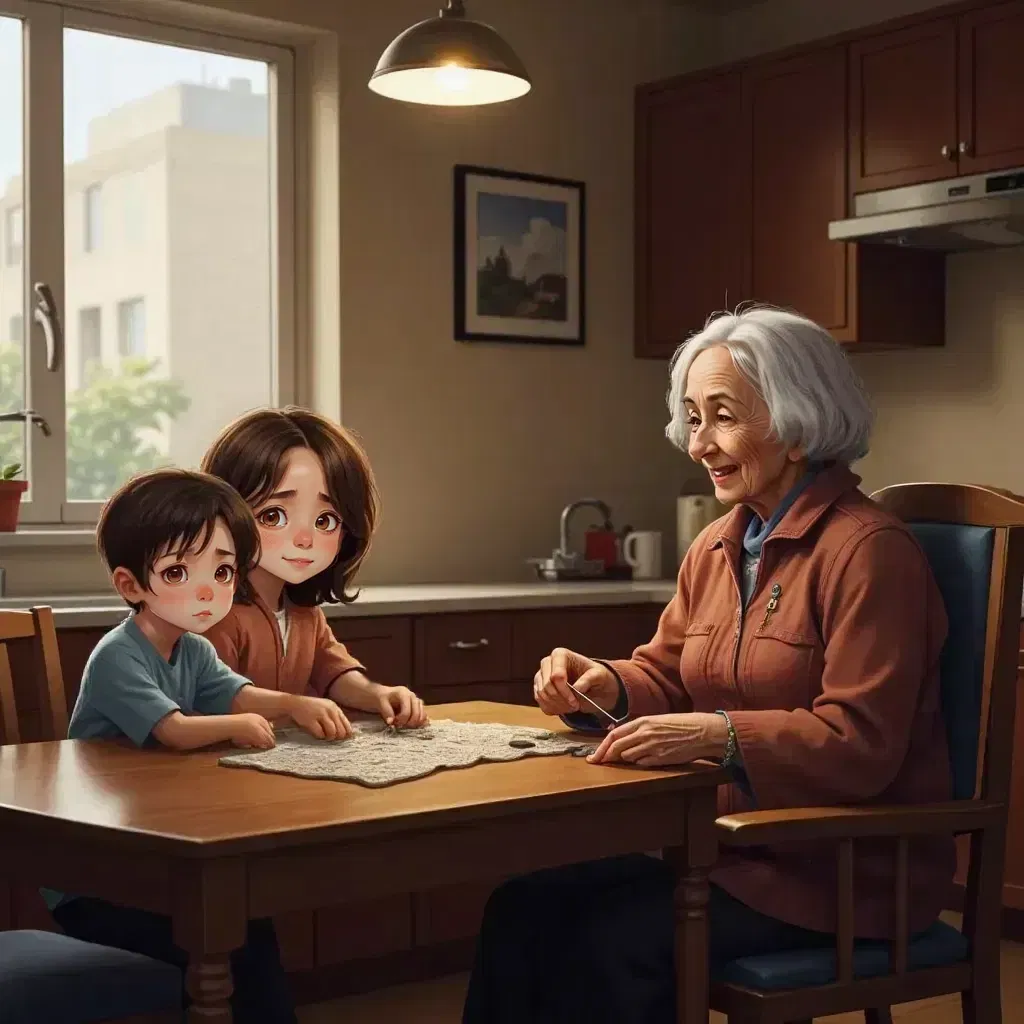
1: The two children are sitting at the table, groaning about their math homework. “Grandma sits relaxed in her rocking chair, crocheting. “I’m doing math too,” she says with a smile. Illustration: A cozy living room with maritime elements (a ship model, seashells). 2: “What, this is math?” ask the children. Grandma smiles. “Come with me, I’ll show you!” Living room begins to transform into a ship landscape. ⸻ 3: Grandma and the children stand on a ship, putting on diving suits. “There’s math everywhere under the water,” says Grandma. 4. Only Grandma and the children’s heads are visible above the water. The children call out, “We’re in the sea, Grandma! Where is the math?” Grandma smiles, “Trust me.” 5. only the children’s feet with flippers as they glide into the water. In the foreground: fish curiously wondering about math. 6. The children are exploring corals, starfish, and seashells—geometric patterns everywhere. 7. The crab makes a perfect parallell line in the sand. The children watch in fascination. Grandma explains euklidean geometry. 8. A puffed-up pufferfish surrounded by rising bubbles. grandma explains spharical geometry. 9. Illustration: Beautiful, organic coral formations with flowing, hyperbolic structures. Explanation of hyperbolic geometry 10. They slowly rise to the surface. “Math is everywhere!” 11. Back on the ship, Grandma picks up her crocheting again. “Do you see now that this is math?” 12. back home
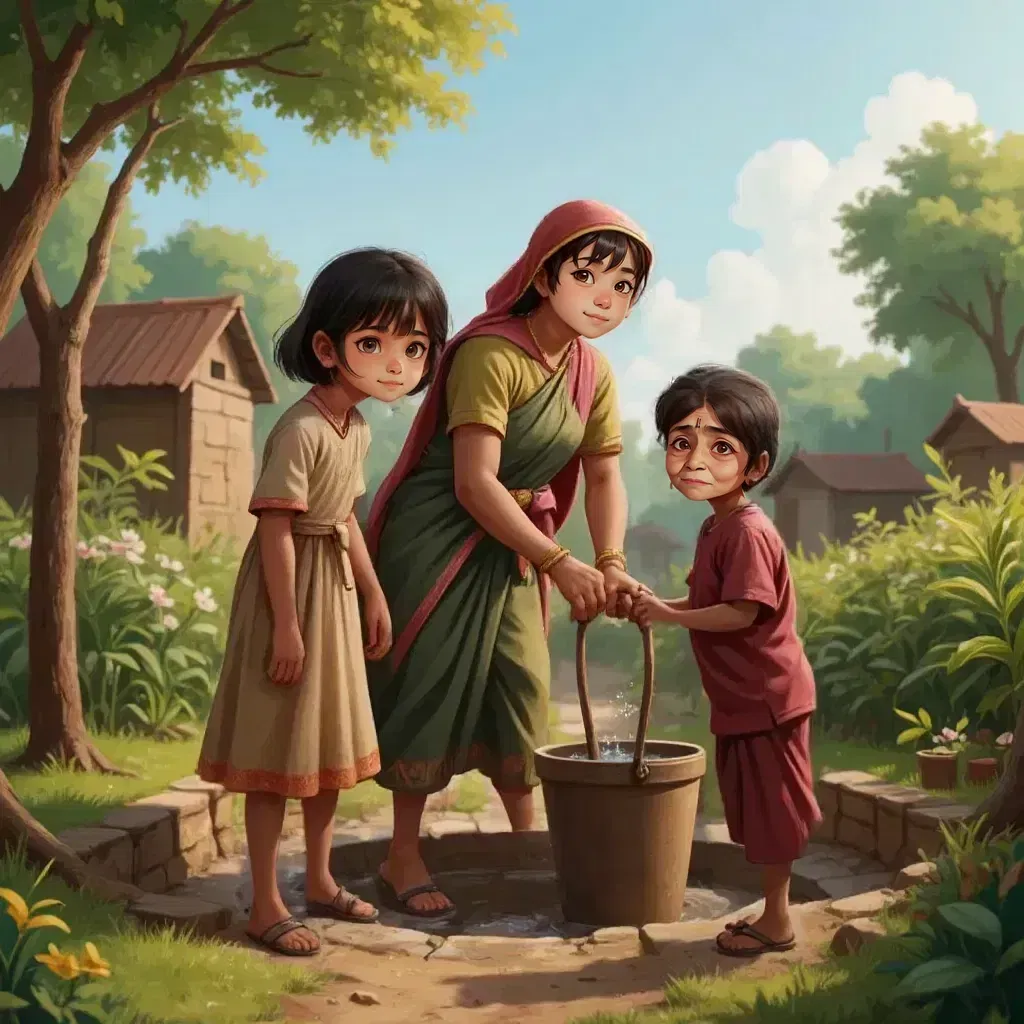
In a village lived a clever girl named Aditi and her younger brother, Aryan. They saw their grandmother struggling to pull a heavy bucket of water from the deep well near their home. Daadi is pulling a heavy bucket from the well. Her hands grip the rope tightly, and her face shows effort. Aditi and Aryan stand nearby, watching with curiosity and concern. “Daadi, why is it so hard to pull the bucket up?” Aryan asked, worried. “Yes,” Daadi explained. “This effort is due to the force I am applying to the bucket by pulling it upward. A force is a push or pull. Right now, I’m pulling the bucket up, but gravity is pulling it down, which makes it feel so heavy.” “Gravity? What’s that?” Aryan asked, scratching his head. Aryan, there has to be a way to help Daadi!” Aryan nodded. “Let’s ask Chacha! He’s always fixing things at his workshop.” The two rushed to their uncle’s workshop, where tools, ropes, and wooden planks were scattered everywhere. “Chacha, can you help us make something to make Daadi’s work easier?” Aditi asked eagerly. Chacha smiled. Of course! We can make a pulley. It’s a simple machine that makes lifting heavy things much easier. A pulley? What’s that? Aryan asked. Chacha said, “A pulley is a wheel with a groove around it. When you pass a rope through the groove, it changes the direction of force. Instead of pulling straight up, you pull down, and it feels lighter” “Can we make one?” Aditi asked excitedly. “Sure! Let’s get some materials,” Chacha said. They found an old bicycle wheel, a rope, and a wooden frame. First, they attached the wheel to the wooden frame using nails. Then, they threaded the rope through the groove in the wheel and tied one end to an empty bucket. Aditi pulled the rope. the bucket lifted smoothly. “That’s the power of the pulley, It doesn’t make the bucket weigh less, but it helps you use less force to lift it.” The next morning, Daadi tried the pulley and was amazed. “Wah! This is wonderful! It’s so easy now!”

Zimbabwe is a landlocked country and is smaller than California. It's made up of grassy plains, mountains, and forests. Zimbabwe is also home to the world's largest man-made lake. Zimbabwe was the last African country to gain independence from British rule in 1980. The country's flag has a green stripe for vegetation and agriculture, a yellow stripe for mineral wealth, a red stripe for blood shed during the war of liberation, a black stripe for the majority of the population, and a white triangle for peace. Culture Zimbabwe has 16 languages and 84.1% of the population is Christian. Natural wonders Zimbabwe is home to Victoria Falls, the world's largest waterfall and one of the Seven Natural Wonders of the World. The Great Enclosure, a 36-foot-high wall that's 820 feet around, is the largest structure in ancient Africa south of the Sahara. Capital and largest city Harare

This book tells the story of a playful pug named Mailo and his diverse group of friends stumbling upon a mysterious treasure map. Excited by the prospect of adventure, they embark on a quest to find the hidden treasure, encountering challenges and obstacles along the way. As they follow clues and unravel the map's secrets, they realize that the true treasure lies not in gold or jewels, but in the bonds of friendship they share. In the end, they celebrate their adventures and the joy of companionship beneath the stars, knowing that with their friends by their side, every moment is a treasure to be cherished.

two fluffy dogs on an adventure

This book tells the story of a pre-teen named Annie who goes through a journey of finding her confidence. Throughout this book, the depiction of clothes is used to represent Annie’s emotions. Each day, she has the choice to put on an outfit to determine her attitude and emotions for the day. Annie spent a lot of time dressing in traits that reflected the sadness she felt, but throughout the story she finds positive traits to dress in, and it changes everything!
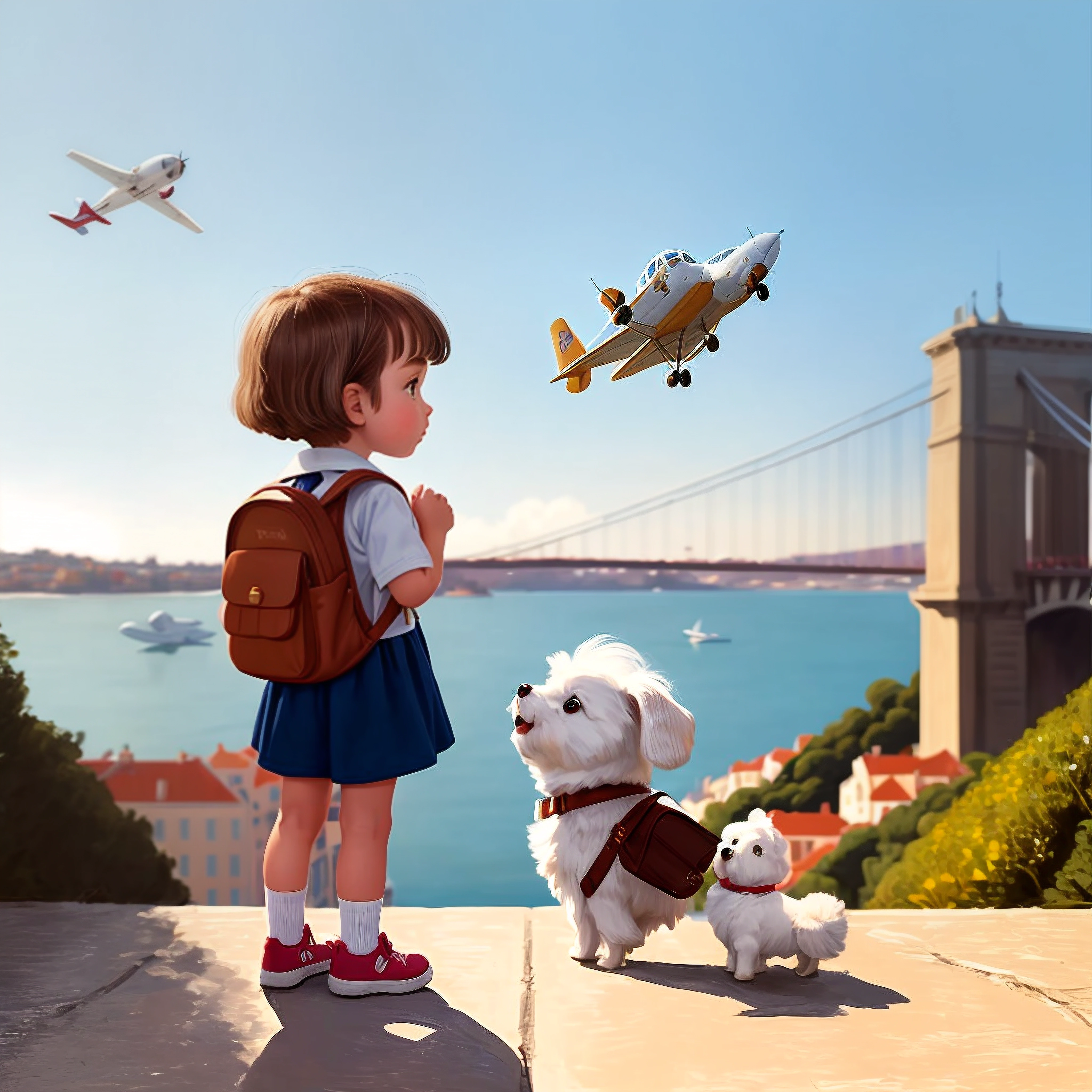
1. A cheerful and fearless little girl named Nina, with her spunky dog Ariel, packing their bags to go to lisbon. Have ariel and nina together 2. Nina and Ariel playing together in the cobblestone streets of Lisbon 3. Nina and Ariel cheerfully riding the tram together through the colorful city of lisbon 4. Nina and ariel laughing and eating Portuguese ham in lisbon 5. nina and ariel cheering and waving from the castle in Sintra Portugal 6. Nina and ariel eating pastel de nata and other sweets while giggling in a pasteleria 7. Nina and Ariel listening to the fado music in the colorful alleys of lisbon 8. Nina playing with ariel in the plaza in the Lisbon 9. Nina and Ariel happily overlooking the bridge in lisbon Portugal 10. Nina happily hugging ariel while watching the sunset in lisbon.
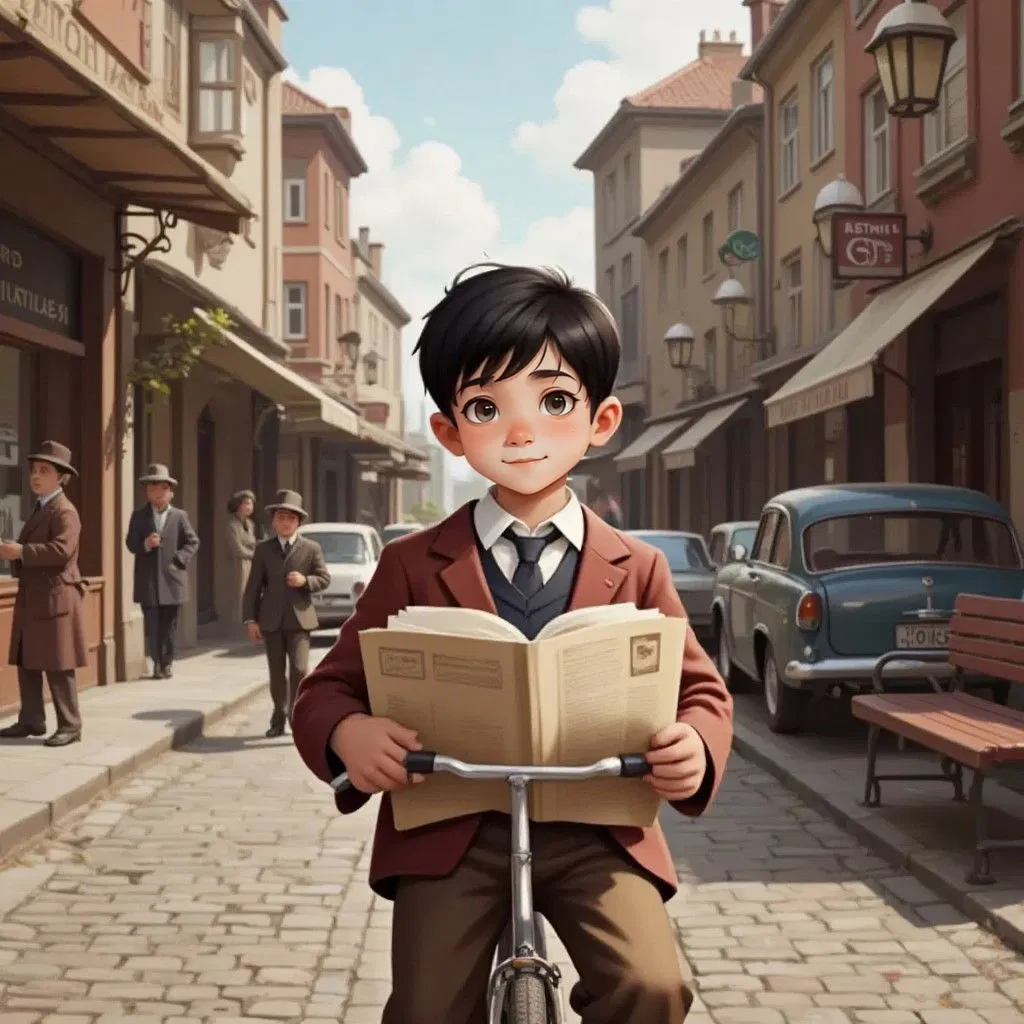
A 10 year old boy in the 1940's with a newspaper delivery route learning lessons of life
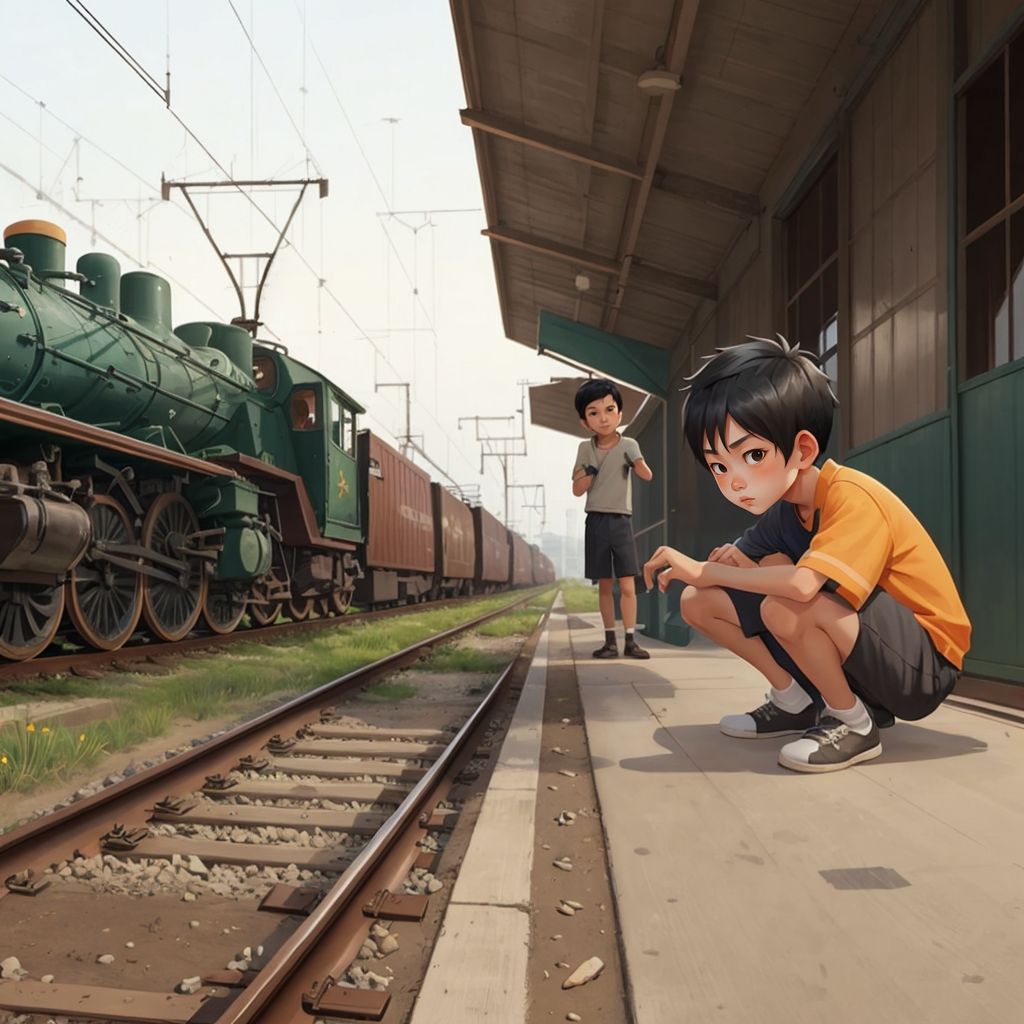
Instruction: 1. illustration very simple During the Civil War, the Transcontinental Railroad aimed to link the U.S. coasts. The Central Pacific Railroad started in Sacramento, CA, employing Chinese laborers, and the Union Pacific in Omaha, NE, with Irish immigrants, Civil War veterans, and freed slaves. Up to 20,000 Chinese workers joined, including 12-year-old Li Wei and his father, who faced discrimination with lower pay and no food or housing. The work was extremely dangerous, with rockslides, explosions, and avalanches, especially in the Sierra Nevada, where workers faced harsh winters and isolation. Sadly, Li Wei’s father died in a rockslide. In 1867, Li Wei and many Chinese workers went on strike for better pay and conditions, but saw limited success. Tensions rose with Native American tribes, like the Cheyenne, who derailed a train near Plum Creek, NE, reflecting the challenges of westward expansion. Despite these struggles, progress continued. On May 10, 1869, the railroad was completed at Promontory Summit, UT, marking a new era in American transportation. Afterward, Li Wei and others faced discrimination in finding work and often lived in isolated Chinatowns. On October 24, 1871, violence erupted in Los Angeles’ Chinatown, killing 19 Chinese, including Li Wei’s friend. In 1875, grieving, Li Wei returned to China. The Transcontinental Railroad was transformative, yet costly for Chinese workers who made up most of the Central Pacific workforce. Facing discrimination and hazardous conditions, they were key to the railroad’s completion. Over 1,200 Chinese workers died, highlighting their sacrifice. Despite advancing U.S. infrastructure, they encountered ongoing hostility and laws against them. Their resilience underscores their overlooked role in shaping 19th-century America.
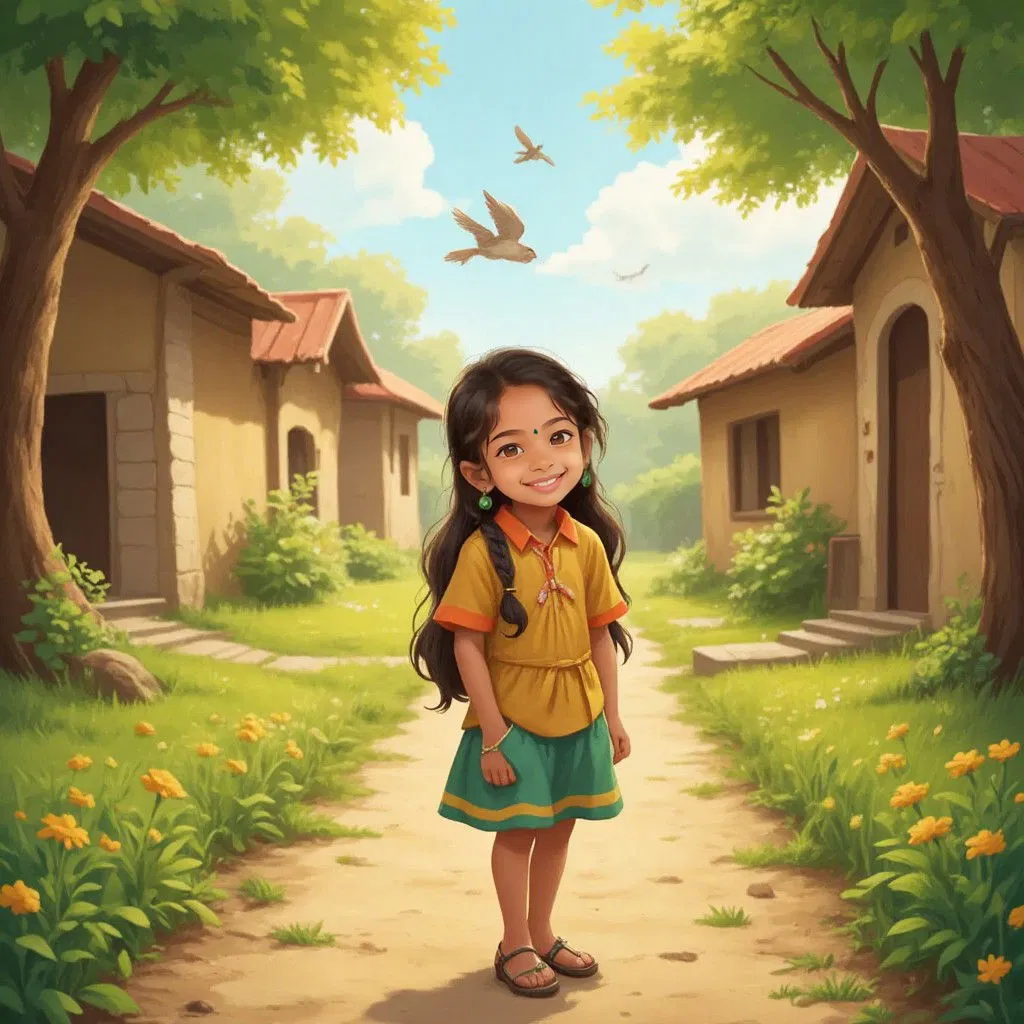
Page 1: Scene 1 - The Beginning of the Adventure Scene Description: A bright sunny day in a small village. We see a cheerful girl named Ishta, with curly braided, long, black hair and a big smile. She is wearing a colorful dress with pockets. Dialogue: Ishta: “Today feels like a special day!” Character Actions: Ishta skips along the path, her arms swinging with excitement. Birds chirp joyfully in the trees. Page 2: Scene 2 - The Mysterious Forest Scene Description: Ishta arrives at the edge of the Enchanted Forest. The trees are tall and vibrant, with sparkling leaves. A sign reads, "Welcome to the Enchanted Forest!" Dialogue: Ishta: “Wow! I wonder what adventures await me!” Character Actions: Ishta looks up in awe, her eyes wide and sparkling. She takes a deep breath and steps confidently into the forest. Page 3: Scene 3 - Meeting the Forest Animals Scene Description: In the forest, Ishta meets a friendly squirrel and a wise old owl sitting on a branch. The squirrel is nibbling on a nut, and the owl has big, round glasses. Dialogue: Squirrel: “Hello! I’m Sammy the Squirrel. Welcome!” Owl: “And I’m Oliver the Owl. Be careful, young adventurer!” Character Actions: Ishta kneels down to talk to Sammy, grinning widely. She tilts her head curiously at Oliver, showing eagerness to learn. Page 4: Scene 4 - The Hidden Treasure Scene Description: Sammy and Oliver lead Ishta to a sparkling waterfall with a hidden cave behind it. The water reflects rainbows, and it looks magical. Dialogue: Ishta: “Wow! Is there treasure behind the waterfall?” Character Actions: Ishta jumps up and down excitedly, clapping her hands. Sammy points towards the cave, and Oliver flaps his wings with a wise look.
To ask WH questions in Thai, you typically use specific question words that correspond to the English WH words. Here are some common WH question words in Thai: Who - ใคร (khrai) What - อะไร (arai) Where - ที่ไหน (thii nai) When - เมื่อไหร่ (muea rai) Why - ทำไม (tham mai) How - อย่างไร (yang rai) To form a WH question, place the question word at the beginning of the sentence. For example: Who is that? - คนนั้นคือใคร? (Khon non kru khai) What is this? - นี่คืออะไร? (Nii khue arai?) Where are you going? - คุณจะไปที่ไหน? (Khun ja bpai thii nai?)

Young boy who is not old enough to understand what happened to his father. His father is unable to see him because he is sick (drug addiction) and this is a story to help the boy cope with that as he ages.

Princess Mia is a little princess in a medieval kingdom. She is loved by her family. She has a lot of friends in the kingdom. Her favorite hobby is cooking. She starts learning how to cook with the help of the headcook Timi. Timi is a fat, lovely man. He loves Mia and teaches details of cooking. In this story, Mia learns her first lesson.

Настала зима. І випав первий сніг. Радісні діти зліпили сніговика. У чарівну ніч сніговик ожив і був здиований. Наступного дня ніхто не приходив до нього, тому він ставав сумним. Проходили дні. І ніхто так і не прийшов до нього. Минали тижні, наставала весна. Потроху сніговик танув і йому було дуже страшно,що він скоро помре. Пройшов місяць, настала весна. Він дуже переживав, щоб нічого з ним не сталось, але він згадав, що він ожив і став як людина.

Aeolus, un petit satellite, est sur le point de réaliser son rêve : voler dans l'espace pour mesurer le vent et aider à prévoir le temps. Malgré ses peurs, il est lancé avec succès depuis le Centre Spatial Guyanais. Une fois en orbite, il découvre la beauté de la Terre et des étoiles. Grâce à ses données, les météorologues du DWD peuvent mieux prévoir le temps. Chaque fois qu'il survole Cologne, il dit bonjour à ses amis de l'école maternelle EMAFA et leur annonce la météo du lendemain. Avec l'aide de ses amis d'EUMETSAT à Darmstadt, Aeolus devient un héros du ciel, veillant sur la Terre avec amour.
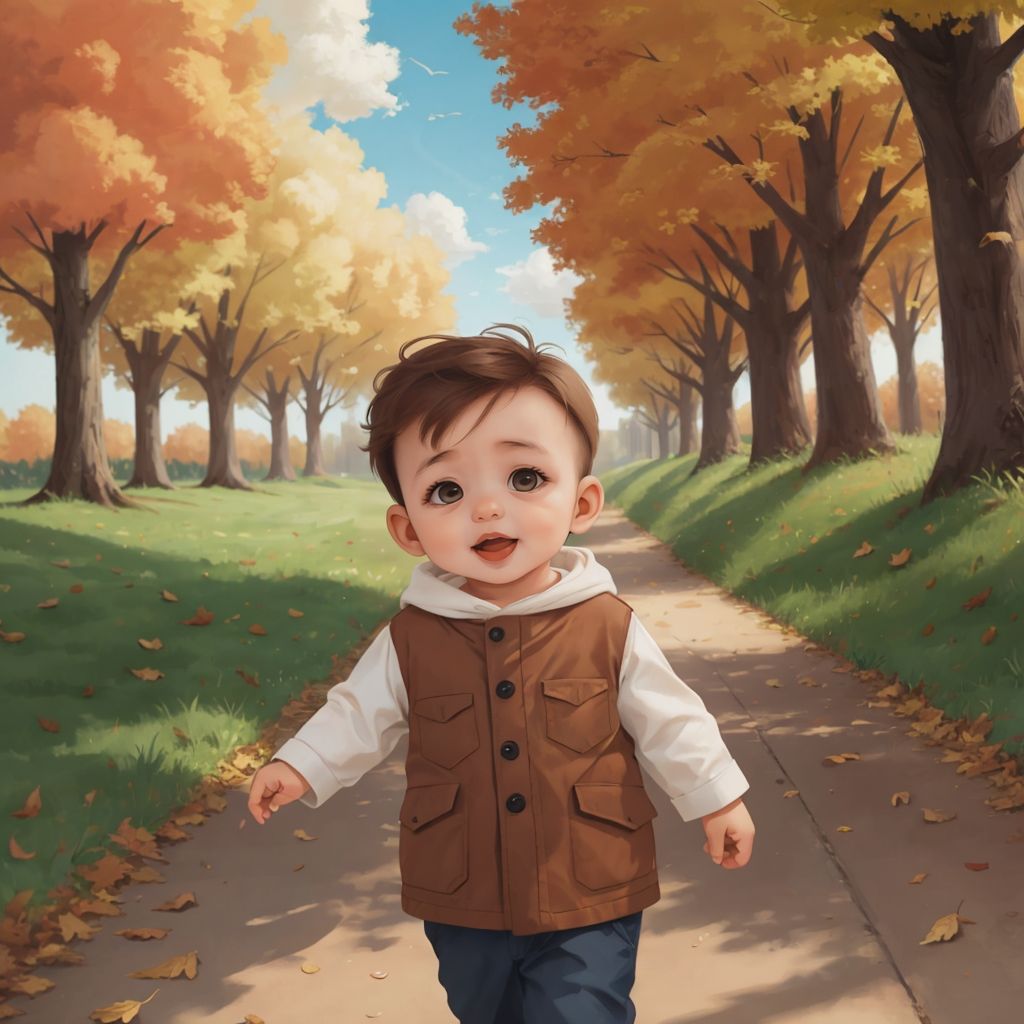
Here’s a more concise summary of The Story of Martin and His First Walks: Martin, an inquisitive 11-month-old boy, enjoys daily walks with his parents, Vasyl and Pavla. Each day, they explore the nearby park, where Martin marvels at birds, clouds, and leaves, all while learning from his parents about curiosity and caution. One sunny autumn afternoon, Martin spots ducks swimming together on the lake, and his parents compare the ducks’ togetherness to their own family bond. Soon after, Martin notices a lost kitten on the path. The family decides to help, and with the guidance of a passerby, they find the kitten’s home, reuniting it with a grateful young girl. On the way back, Vasyl tells Martin how their small act of kindness made someone happy, encouraging him to be helpful. That evening, they share stories and enjoy a cozy meal together. Although young, Martin is already learning love, empathy, and kindness through these small but meaningful experiences with his family. This version highlights the key moments and themes—Martin’s curiosity, family togetherness, and kindness—while keeping it brief.
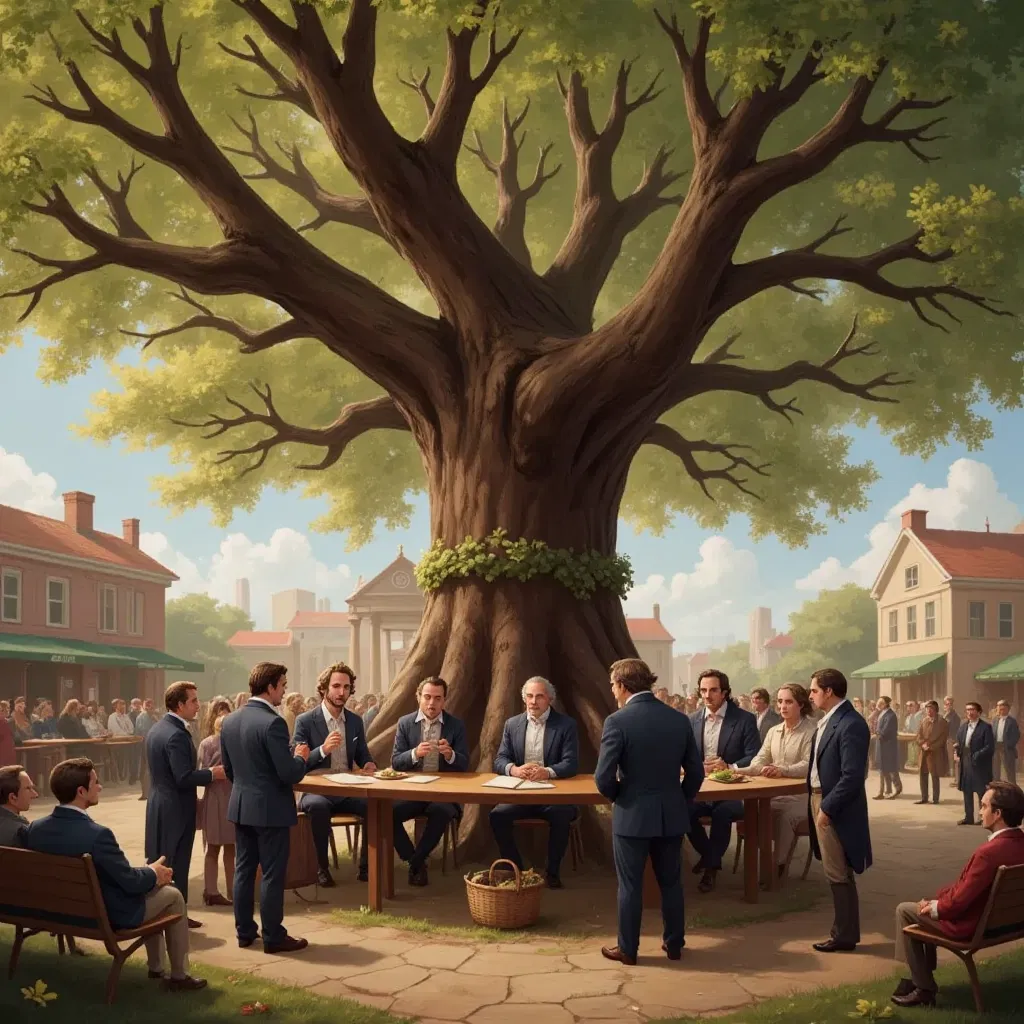
Two different groups arguing over ratification of the Constitution; The issues and debates that led to the formation of the first two political parties; The first transition of power; Louisiana Purchase and its exploration; Westward migration, the reasons for it, technologies that supported it, and conflicts that occurred because of it; The War of 1812, both causes and results; Monroe Doctrine; "the age of the common man”; and President Andrew Jackson, the changes he made, the results of those changes, and the impact on American Indians.
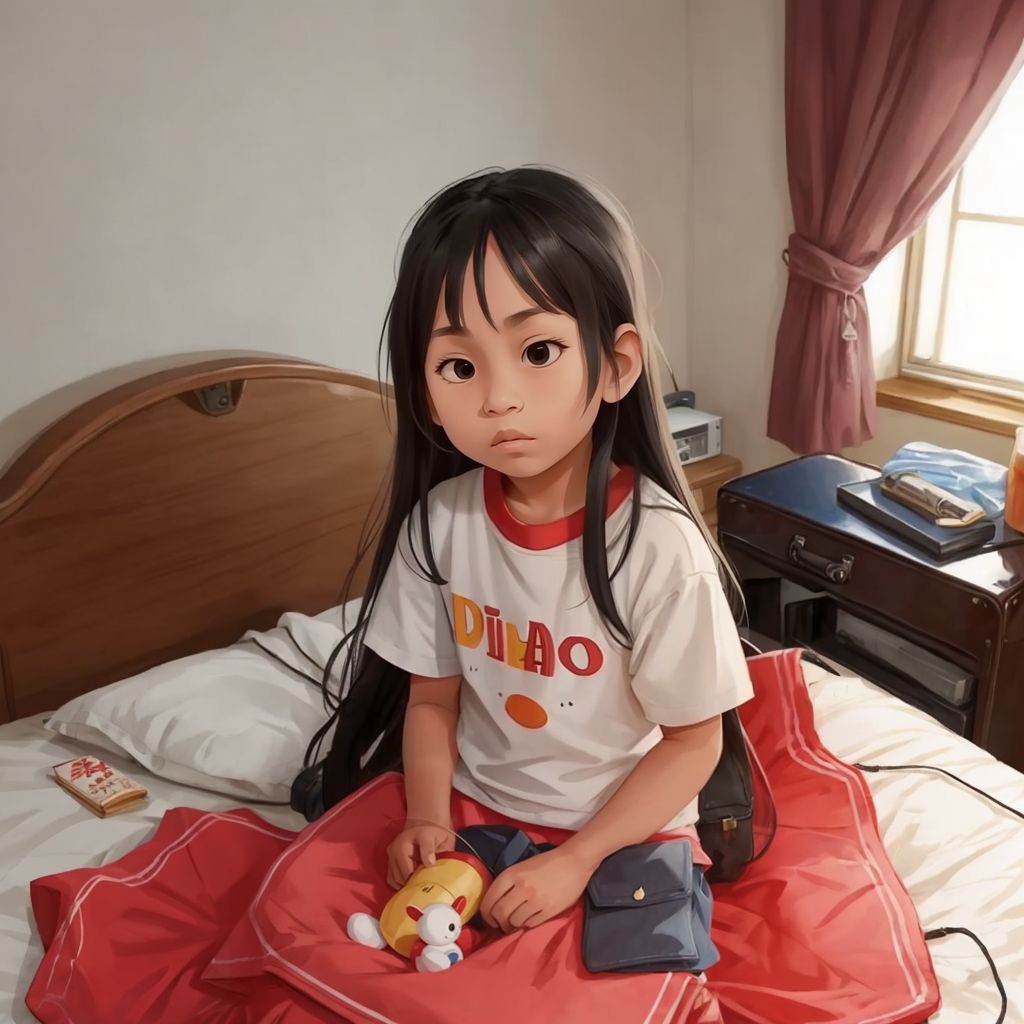
Sala goes to Japan